Language delay in preschool children. Early identification, educational support and collaborative intervention
1 University of Birmingham, School of Business 2010, „Ion Creangă” Kindergarten Slatina, Olt, Romania
*Corresponding author: geodoro1@gmail.com
Abstract. Language delay can restrict preschool children’s participation in play, peer interaction, emergent literacy and learning. This article examines the educational identification of persistent language concerns and aims to connect evidence on early intervention with inclusive preschool practice.
A structured narrative review was undertaken using a transparent, question-led search of PubMed, ERIC and Google Scholar, supplemented by professional guidance and reference-list searching. Searches combined terms for preschool age, language delay or developmental language disorder, intervention and educational support.
The reviewed evidence consistently supports responsive adult–child interaction, modelling, play-based language opportunities, parent involvement and coordinated support. Educational observation is most informative when it documents receptive and expressive language, initiation, symbolic play, participation and generalisation across routines. Persistent or complex concerns require multidisciplinary assessment, including consideration of hearing and broader development.
Preschool educators can strengthen communication by embedding individualised language opportunities within meaningful routines while working within clear professional boundaries. Coordinated observation, referral, family partnership and progress monitoring can reduce participation barriers and support timely intervention. Further research should examine implementation in multilingual settings and report functional outcomes alongside standardised language measures.
Keywords: Developmental language disorder; Language delay; Preschool education; Early intervention; Inclusive practice; Family partnership.
1. Introduction
Language is a central mechanism through which preschool children participate in play, express needs, build relationships and access early learning. Language delay may involve restricted vocabulary, short or poorly organised utterances, difficulty understanding spoken messages, limited narrative ability or reduced flexibility in social communication. Speech concerns sound production, voice and fluency, whereas language concerns understanding and expressing meaning through vocabulary, grammar, discourse and pragmatic use.
The background to this research is the practical difficulty of distinguishing transient variation from persistent developmental need. Some children who begin speaking late make substantial progress, while others continue to experience language and later literacy difficulties. Receptive difficulties, loss of previously acquired skills, limited communicative intent and limited progress despite support require particular attention. Multilingual exposure alone should not be interpreted as the cause of a language disorder; assessment should consider communication across all languages and contexts.
Terminology in this field requires care. Following the CATALISE consensus, the term developmental language disorder (DLD) is used for persistent language difficulties that have a functional impact on everyday life and educational participation and are not explained by a known differentiating biomedical condition (Bishop et al., 2017). The broader expression language delay is retained where the evidence concerns late language emergence or a developmental profile that has not yet been established as persistent.
The objective of this article is to synthesise evidence and professional guidance relevant to the identification and support of language delay in preschool settings. The research questions concern the signs and contextual factors that should inform educational observation, the intervention approaches that recur in the literature, and the ways in which preschool educators, families and speech-language professionals can coordinate support.
The significance of the research lies in connecting clinical evidence with everyday preschool practice. Educators do not diagnose language disorders, but they can document functional communication, create language-rich environments, initiate responsible referral and support the generalisation of individualised targets. Timely coordination may reduce communication barriers while avoiding both premature labelling and an unsupported wait-and-see approach.
2. Research methodology
This article used a structured narrative review design to answer three practice-oriented questions: (1) which signs and contextual factors should inform preschool observation; (2) which intervention principles recur across the evidence; and (3) how educators, families and speech-language professionals can coordinate support. A narrative review design was adopted to integrate heterogeneous empirical studies, systematic reviews, clinical guidance and professional practice resources into an educationally relevant synthesis.
Searches were conducted in PubMed, ERIC and Google Scholar, with supplementary backward reference searching. The principal search string was: ("language delay" OR "late language emergence" OR "developmental language disorder") AND (preschool OR "early childhood") AND (intervention OR "language support" OR "parent training" OR "adult-child interaction"). Additional targeted combinations used "play-based language support", "shared reading", "oral language comprehension", "multilingual" and "progress monitoring". Priority was given to English-language publications from 2020 onward, while earlier landmark studies and consensus papers were retained where they defined terminology or established an intervention approach.
Screening followed a brief staged process: database and supplementary-search records were checked for topical relevance; titles and abstracts were screened against the three research questions; potentially relevant full texts were assessed for preschool applicability, intervention or identification content, and educational usefulness; and eligible sources were retained for thematic synthesis.
Data were organised around the three research questions and then coded across four connected analytical categories: early identification and differential considerations; intervention techniques; family and professional collaboration; and functional progress monitoring. Given the heterogeneity of the reviewed sources in terms of design, participants, outcomes and statistical reporting, the findings were synthesised narratively.
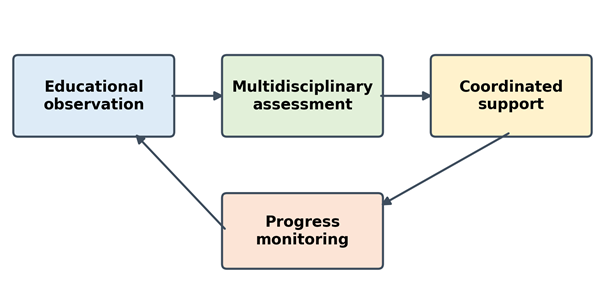
Figure 1. Child-centred pathway for responding to persistent language concerns. Source: author’s synthesis
The pathway presented in Figure 1 provides a practice-oriented conceptual synthesis of the reviewed evidence, emphasising a child-centred sequence of observation, family discussion, referral, coordinated support and progress monitoring. Its stages draw on functional observation and monitoring of late language emergence (American Speech-Language-Hearing Association [ASHA], n.d.-b); consistent terminology and recognition of functional impact (Bishop et al., 2017); responsive and interaction-based intervention principles (Girolametto et al., 1996; Walker et al., 2020); profile-matched assessment and intervention, including hearing and broader developmental considerations (Neumann et al., 2024); and links between oral language, shared reading and emergent literacy (Whitehurst & Lonigan, 1998).
3. Results
The synthesis produced four consistent findings. First, educational observation is most informative when it documents communication across routines, free play, peer interaction, shared reading and small-group activity. Functional indicators include initiation, comprehension, vocabulary, word combinations, sentence organisation, responses to questions, symbolic play and narrative sequence. Hearing and broader developmental factors remain important differential considerations.
Second, modelling, play-based methods, adult–child interaction, discrete-trial approaches and technology- or media-based approaches recur in early-childhood intervention research. Walker et al. (2020), in a systematic survey of 190 empirical studies, reported that 24 studies examined social validity or intervention acceptance, with 20 indicating moderate-to-high acceptance. The survey also identified positive impacts for most tested interventions. Convergent support for differentiated, profile-sensitive intervention is provided by the clinical practice guideline of Neumann et al. (2024), while a preschool intervention study found gains in oral language comprehension and executive-function measures following a multi-tier programme jointly delivered by teachers and speech-language therapists (Acosta-Rodríguez et al., 2022).
Third, the evidence supports differentiated intervention matched to the child’s language profile and needs. The guideline reports parent-training effects for late talkers with expressive delay and recommends direct language therapy when receptive delay or additional risk factors are present. It also identifies input enrichment, modelling, elicitation, production opportunities, metalinguistic approaches and visualisation among intervention components (Neumann et al., 2024).
Fourth, evidence and guidance converge on the importance of coordinated support. Classroom strategies are most useful when responsive, repeated, meaningful and linked to daily participation. Family knowledge, educational observation, hearing information and speech-language assessment provide complementary rather than interchangeable data. Interactive focused stimulation also illustrates how caregiver-responsive techniques can be organised around the child’s communicative focus and expressive vocabulary targets (Girolametto et al., 1996).
Table 1: Synthesis of principal findings and implications for preschool practice.
|
Finding |
Evidence synthesis |
Educational implication |
|
Observation across contexts |
Communication varies by task, partner, familiarity and language exposure. |
Record context, prompt, response and independence. |
|
Responsive interaction |
Modelling, interaction and play-based methods recur in the literature. |
Follow the child’s focus, expand messages and allow processing time. |
|
Differentiated support |
Expressive-only and receptive-expressive profiles may require different support. |
Refer persistent concerns and align practice with specialist goals. |
|
Family collaboration |
Caregiver participation is an important component. |
Share strengths and recommend achievable interaction strategies. |
|
Progress monitoring |
Gains should be considered with participation and generalisation. |
Track whether skills are spontaneous, prompted or modelled. |
4. Discussion
The review contributes an educational translation of evidence across the three stated research questions. First, it identifies observable functional indicators and the contexts in which they should be documented. Second, it identifies recurring intervention principles while recognising the need for differentiated support. Third, it links observation, family knowledge, specialist assessment and classroom generalisation within one child-centred pathway. This framing supports inclusive preschool decision-making while preserving the boundary between educational observation and clinical diagnosis.
For the first research question, language delay and DLD should be understood as heterogeneous functional concerns rather than as deficits defined only by word count. The distinction between expressive and receptive profiles is important because limited comprehension may affect participation even when a child produces familiar words or memorised phrases. Educational records should capture what the child understands, how communication is initiated and whether skills generalise across settings (Bishop et al., 2017; ASHA, n.d.-b).
For the second research question, the prominence of modelling, responsive interaction and play-based methods is consistent with social-interactionist accounts of language development. Children learn language through shared attention, meaningful action, repeated routines and contingent adult responses. Expansion, recasting and interactive focused stimulation preserve the child’s intended meaning while providing a more advanced or more frequent linguistic model (Girolametto et al., 1996). Interactive shared reading and symbolic play create opportunities for vocabulary, grammar, inference, turn-taking and narrative organisation. This connection also aligns with foundational evidence linking oral language and shared book experiences to emergent literacy (Whitehurst & Lonigan, 1998).
For the third research question, the literature supports a tiered and collaborative interpretation of intervention. Universal language-rich practice benefits all children; targeted small-group support increases structured opportunities; and individualised specialist intervention responds to persistent or complex needs. These levels should complement one another. Educational support cannot replace clinical assessment, and therapy detached from daily contexts may not ensure generalisation. Recent intervention evidence also supports matching techniques to the child’s language profile and target domain rather than treating DLD as a uniform presentation (Acosta-Rodríguez et al., 2022; Ansari et al., 2025; Neumann et al., 2024).
Walker et al. (2020) mapped broad use of modelling, play and interaction-based approaches, whereas Neumann et al. (2024) emphasised intervention matched to the child’s profile and risk factors. More recent reviews indicate that both explicit and implicit elements may be useful for vocabulary learning, with outcomes influenced by children’s profiles and by the specificity of taught targets (Ansari et al., 2025). Digital approaches may complement, rather than automatically replace, conventional intervention, with the current evidence strongest for selected phonological and vocabulary outcomes (Zhou et al., 2025). Together, these sources support coordinated, profile-sensitive decision-making rather than a standardised activity package.
Multilingualism requires particular care. Exposure to more than one language is not evidence of disorder, and the home language should be treated as a developmental and relational resource. Evaluation should consider the child’s complete linguistic experience.
5. Conclusions
This review found that effective responses to preschool language delay and DLD combine careful functional observation, appropriate multidisciplinary assessment, responsive interaction, meaningful play, family involvement and systematic progress monitoring. Its practice-oriented contribution is the alignment of these elements with three decisions faced in preschool settings: what to observe, which intervention principles to prioritise, and how to coordinate support across adults and contexts.
The findings highlight the importance of preschool language support that is responsive to the child’s individual communication profile and embedded in everyday educational contexts. The evidence supports a coordinated pathway that brings together observation, family discussion, referral, profile-sensitive intervention and progress monitoring across routines and settings. Such an integrated approach can strengthen participation, support the generalisation of language skills and facilitate timely educational and specialist responses to persistent language concerns.
Future research should focus on preschool samples, include receptive and expressive outcomes, report functional participation and generalisation, and examine multilingual contexts. Such studies could compare universal, targeted and individualised support and investigate how educator–family–specialist collaboration influences sustained outcomes.
6. References
American Speech-Language-Hearing Association. (n.d.-a). Early intervention. ASHA Practice Portal. https://www.asha.org/Practice-Portal/Professional-Issues/Early-Intervention/
American Speech-Language-Hearing Association. (n.d.-b). Late language emergence. ASHA Practice Portal. https://www.asha.org/Practice-Portal/Clinical-Topics/Late-Language-Emergence/
Bishop, D. V. M., Snowling, M. J., Thompson, P. A., Greenhalgh, T., & CATALISE Consortium. (2017). Phase 2 of CATALISE: Terminology. Journal of Child Psychology and Psychiatry, 58(10), 1068–1080. https://doi.org/10.1111/jcpp.12721
Girolametto, L., Pearce, P. S., & Weitzman, E. (1996). Interactive focused stimulation for toddlers with expressive vocabulary delays. Journal of Speech and Hearing Research, 39(6), 1274–1283. https://doi.org/10.1044/jshr.3906.1274
Neumann, K., Kauschke, C., Fox-Boyer, A., Lüke, C., Sallat, S., & Kiese-Himmel, C. (2024). Clinical practice guideline: Interventions for developmental language delay and disorders. Deutsches Ärzteblatt International, 121(5), 155–162. https://doi.org/10.3238/arztebl.m2024.0004
Walker, D., Sepulveda, S. J., Hoff, E., Rowe, M. L., Schwartz, I. S., Dale, P. S., Peterson, C. A., Diamond, K., Goldin-Meadow, S., Levine, S. C., Wasik, B. A., Horm, D. M., & Bigelow, K. M. (2020). Language intervention research in early childhood care and education: A systematic survey of the literature. Early Childhood Research Quarterly, 50, 68–85. https://doi.org/10.1016/j.ecresq.2019.02.010
Whitehurst, G. J., & Lonigan, C. J. (1998). Child development and emergent literacy. Child Development, 69(3), 848–872. https://doi.org/10.1111/j.1467-8624.1998.tb06247.x
Acosta-Rodríguez, V. M., Ramírez-Santana, G. M., & Hernández-Expósito, S. (2022). Intervention for oral language comprehension skills in preschoolers with developmental language disorder. International Journal of Language & Communication Disorders, 57(1), 90-102. https://doi.org/10.1111/1460-6984.12676
Ansari, R., Chiat, S., Cartwright, M., & Herman, R. (2025). Vocabulary interventions for children with developmental language disorder: A systematic review. Frontiers in Psychology, 16, 1517311. https://doi.org/10.3389/fpsyg.2025.1517311
Zhou, Z., Deng, C., Yin, D., Yang, Q., & Chen, Z. (2025). Digital intervention in children with developmental language disorder: Systematic review. JMIR mHealth and uHealth, 13, e59992. https://doi.org/10.2196/59992